Silk Pajamas: Benefits, How to Choose, Care Guide and FAQ
If you want to lift the quality of daily life and keep your body in good shape, improving how well you sleep is the quickest route there. And the first meaningful step towards that is choosing the right sleepwear.
Among all the sleepwear available, silk pajamas made from 100% pure silk stand out for being"relaxing to wear" and "conducive to deep sleep".
This article goes through what makes silk pajamas appealing, sets out the pieces you can actually buy, the benefits silk pajamas bring, and how to wash them.
The material and characteristics of silk pajamas, the "beauty serum you wear"

Let us start with the material silk pajamas are made from, and what that material brings with it.
The material of silk pajamas
The defining feature of silk pajamas is the silk itself.
The fibre drawn from the cocoon of the silkworm is silk. It is the only long filament among natural fibres,and because the filament is long it has a lustre all its own, along with an exceptionally smooth touch.
Touch it and it settles against the skin, for a comfort nothing else quite replaces.
Because the fibre is fine and soft, it breathes extremely well and regulates humidity impressively. Even when you perspire it stays fresh rather than stuffy, so you can settle into sleep even in summer.
When buying silk pajamas, pay particular attention to whether they are 100% pure silk.
Most products sold as silk pajamas are 100% silk, but some blend in synthetic fibre for added strength.
To get the full benefit of silk pajamas, we recommend choosing a pair made from 100% pure silk.
Silk characteristic (1): gentle on the skin
The best-known quality of silk ishow little it irritates the skin.
Silk is a natural protein fibre containing eighteen amino acids close to those found in skin and hair.
Alongside the smooth touch already mentioned, its composition is close to human skin, which reduces the discomfort friction causes.
That means even people with sensitive skin or atopic tendencies can wear it with confidence.
Silk alsohas antibacterial propertiesthat help hold back the growth of bacteria. These qualities are why silk has long been regarded as an excellent material for lowering the risk of skin trouble.
Silk characteristic (2): breathability and humidity regulation

The other quality worth noting is itsexcellent breathability.
Tiny pockets of air form between silk's fine fibres and encourage air to circulate.
As a result, silk pajamas absorb and release humidity and perspiration efficiently, so even people who perspire in their sleep stay comfortable.
Those same pockets of air also provideinsulation, so silk pajamas hold body heat well despite how light and lustrous they look.
What silk pajamas do for you

Let us look at the benefits of silk pajamas. Because of what the material is, wearing silk pajamas brings several advantages at once.
(1) Suited to allergy-prone skin, and helping prevent rough skin
Silk pajamas place little burden on the skin and help prevent it becoming rough. The smooth fibre reduces friction against the skin,helping avoid itchiness.
Its natural antibacterial quality alsoholds back the growth of bacteria.
For anyone with allergies or sensitive skin, silk pajamas keep irritation to a minimum and make for a comfortable night.
(2) Helping the skin look its best
Silk contains a component called sericin.
The amino acids within it are similar in composition to the natural moisturising factor in human skin, which is why silkhelps retain moisture.
If your skin tends to become dry, itchy or flaky in winter, silk pajamas are worth trying.
After wearing them for a while, arms and legs in particular feel noticeably different.
Silk has a similar effect on hair, which is why silk hair caps and related pieces are also available to use alongside them.


(3) Encouraging deeper sleep
Taken together, these qualities mean silk pajamashelp you sleep more deeply.
Breathability and moisture absorption keep you fresh through summer, while the moisture-retaining quality guards against dryness in winter.
The smooth touch and light feel mean you barely register the garment at all, so it does not disturb your sleep.


"Foo Tokyo" pajamas, made from the highest grade of silk

Known for an exceptional touch,Foo Tokyois a luxury lifestyle brand that pursues perfection from material through to sewing.
Every product is made piece by piece in domestic Japanese factories with world-class sewing skills, and the brand is a favourite both for personal use and as a gift for a special day.
Foo Tokyo silk pajamas use"6A / 5A grade" silk, the finest tier, which accounts for less than 10% of world silk production, in 100% pure silk.
Wear them once and going back to other sleepwear is difficult.
A record with leading department stores and luxury trains

Foo Tokyo is stocked atIsetan Shinjuku and Matsuya Ginzaamong other well-known Japanese department stores.
Foo Tokyo also develops products for business clients — supplying in-train wear forJR Kyushu's luxury train "Seven Stars in Kyushu", which travellers worldwide aspire to ride; producing cabin wear for private jets; and making loungewear for Michelin-starred auberges.

Foo Tokyo's signature silk pajamas have also been used in popular television dramas for their elegant look, and have appeared repeatedly across television, magazines and other media.
Where can you buy Foo Tokyo silk pajamas?
If you would like to buy Foo Tokyo silk pajamas, we recommend theofficial online storefirst. You can order with confidence, and if you need to change size, help comes quickly.
Explore Foo Tokyo's Official Website
If you would rather see the pieces in person before deciding, you can visit a store. Our permanent counter at&SLEEP on the 6th floor of Matsuya Ginzacarries Foo Tokyo products year-round.
The brand also runs pop-up events at leading department stores and select shops. Register for our official LINE account or newsletter and you will hear when a pop-up comes to your area — worth signing up in advance if you are interested.
Our Locations
[Recommended] Popular silk pajamas that help you sleep (women's)
Here are some silk pajamas you can actually buy.
Alongside the classic plain colours, Foo Tokyo also makes silk pajamas in exclusive original patterns, for more to choose from.
We hope you find the pair that suits you best.
Silk Pajamas — Pink Beige

Foo Tokyo silk pajamas come in four sizes from S to LL, in a unisex design that suits anyone.
The top and trousers are sold separately, so you can mix sizes and colours freely and build something of your own.
The most popular choice among women is the classic pink beige. The shade shifts character with the light, bringing a warmth that feels reassuring and quietly happy.

Foo Tokyo silk pajamas are as considered in their sewing as in their material.
To preserve the fluid smoothness of silk against the skin, they use a special construction that keeps seams from touching the body.
Turn the pajamas inside out and the finish is still beautiful — silk pajamas built like a piece of fine jewellery.
≫ Shop Foo Tokyo Silk Pajamas in Pink Beige
Featured items
Silk Pajamas — Pearl White

Classic white is another much-loved colour. Pure white paired with silk's particular lustre shines like a pearl, and seems to carry you off into comfortable sleep.
It also works well combined with another colour, for a two-tone look of your own.
≫ Shop Foo Tokyo Silk Pajamas in Pearl White
Featured items

Silk Satin Pullover

This is a short-sleeved silk top designed for the warmer months —light and breathable, for a fresh, easy wear. The pullover design is simple and clean, easy to put on and take off, and lets your skin enjoy the smoothness of silk fully.
Wear it on its own, or with the matching silk trousers as a set for aquietly luxuriouslook.
It carries the same high-quality material as Foo Tokyo's classic silk pajamas, keeping the lustre and comfortable hand of silk satin, with a look that works both for a short trip out and for relaxing at home.
The design is unisex, in charcoal gray, elegant navy, pearl white and pink beige to suit different tastes.
≫ Shop the Foo Tokyo Silk Satin Pullover


Interior Like Silk Pajamas

More than simply sleepwear, these were built on the idea of "a work of art that decorates the room". The design draws on traditional Japanese ceramic craft, bringingan aesthetic of daily life into loungewear.
The surface of the fabric uses a weave original to Foo Tokyo, built on the classical acanthus leaf motif with a bird woven in as a symbol of happiness, for a finely detailed and refined artistic feel.
These pajamas step outside the frame of "just sleepwear" and exist almost as a painting that lifts the character of a room, so that the wearer can enjoy beauty and taste at home too.
≫ Shop the Foo Tokyo Interior Like Silk Pajamas
Featured items

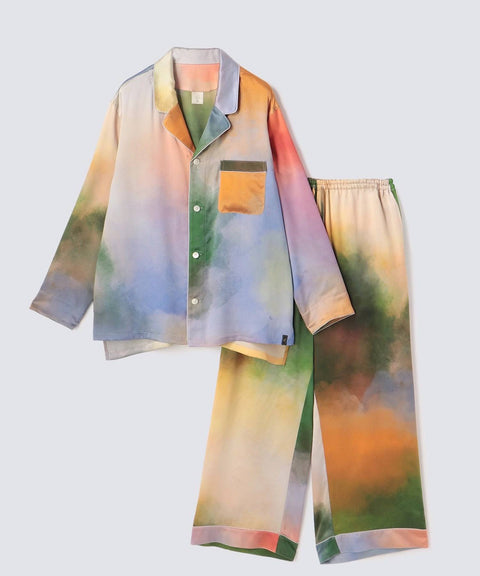
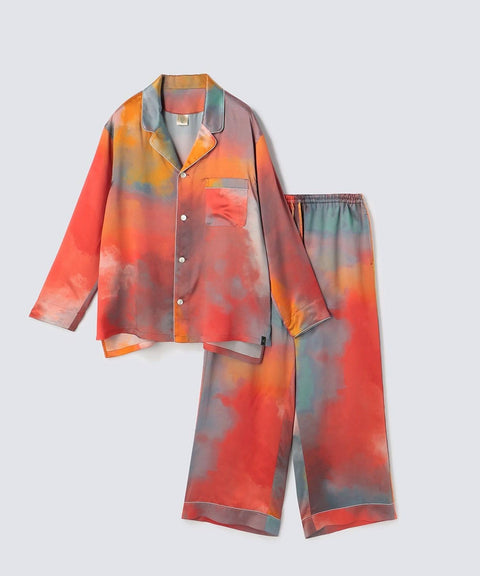
Watercolor Silk series

The Watercolor Silk series was made as resort loungewear, aiming at scenery beautiful enough to feel like a dream.
A special technique prints vivid watercolour work onto premium silk, in two colourways:"Evening Glow", as though the dusk sky had been cut out and kept; and"Misty Lake", using bleeding, layered colour to evoke the mist-covered lakeside that defines a resort.
Because each pair is cut from a different part of the fabric, every one carries its own character — which makes the Watercolor Silk pajamas a particularly good choice for anyone who wants sleepwear that exists only once.
≫ Shop Foo Tokyo Watercolor Silk Pajamas
Featured items


Silk Jacquard Pajamas

These silk jacquard pajamas use jacquard-woven silk from Tango in Kyoto, with the fabric woven withthe traditional Japanese "flowing water" motif, a pattern often seen on kimono, brought out in relief through skilled craft.
This is a piece that concentrates the very best of Japanese technique — beyond the category of sleepwear, closer to traditional craft.

The flowing-water motif carries the meaning of washing away hardship and misfortune, a wish for safety and good fortune, and is considered highly auspicious.
Given as a gift for a special celebration, it is certain to bring both surprise and good wishes.
≫ Shop Foo Tokyo Silk Jacquard Pajamas
Featured items


Recommended silk pajamas that help you drift off [popular with men]
Next, the Foo Tokyo silk pajama colours that are especially popular with men. In terms of size, men most often choose L and LL.
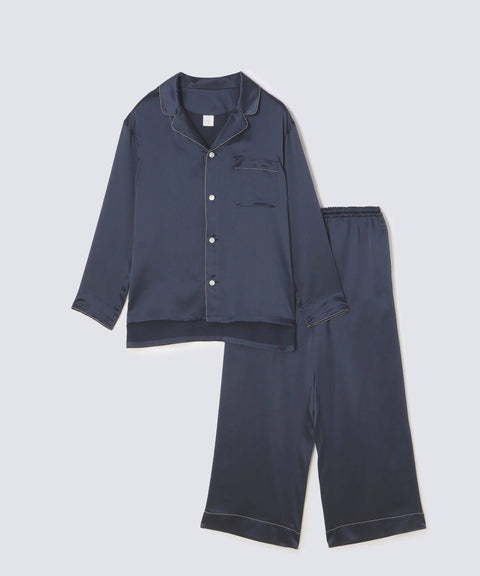
Silk Pajamas | Elegant Navy

Across the Foo Tokyo silk pajama range,"Elegant Navy"is the colour men choose most.
Deeper than an ordinary dark blue, it seems to draw you into a composed, deep sleep. In traditional Japanese colour names this shade is called kachi-iro, the "colour of victory", and has long been regarded as auspicious.
Silk pajamas in a colour that is both fortunate and unfussy make for comfortable sleep, and are a popular gift for the men in your life.
≫ Shop Foo Tokyo Silk Pajamas in Navy
Featured items
Silk Pajamas | Charcoal Gray

"Charcoal Gray"is a classic that men and women both love.
This deep ink shade with a hint of blue is also known as ai-sumi-cha, a colour widely loved in the mid-Edo period. People are said to have dyed their clothes the same colour and worn them as a sign of reconciliation.
The related name aisumi-cha derives from a phrase meaning that a settlement has been reached — the sense of matters coming to rest. Which is why we hope anyone wearing this colour can end the day in the same settled frame of mind.
Silk pajamas carrying that sense of good fortune are often chosen to convey a feeling, and are a first choice for many people buying for someone who matters to them.
≫ Shop Foo Tokyo Silk Pajamas in Charcoal Gray
Featured items

Beyond silk pajamas: Foo Tokyo's other popular loungewear
Mention Foo Tokyo and most people think first of the classic silk pajamas — but the brand's appeal does not end there.
Even if you consider yourself a silk-pajamas-only sort of person, these equally comfortable, beautifully finished pieces of premium loungewear are hard not to fall for. Here is a selection of the most popular.
Royal Organic Cotton double-breasted pajamas

Known for their elegant line, these double-breasted pajamas have even been adopted as cabin wear on private jets — a piece that is both comfortable and genuinely refined.
The fabric is fine organic cotton, mercerised to give ita smooth, fluid touch close to silk.
Because they are comfortable and beautifully made, they are a favourite with men and women who travel often for business.
≫ Shop Foo Tokyo Royal Organic Cotton double-breasted pajamas
Royal Organic Cotton flowing dress
This flowing dress made from Royal Organic Cotton is an ideal choice for women looking for loungewear that is both comfortable and charming.
Soft and gentle against the skin, it has a particularly fine, soft hand, with a lustre close to silk anda smoothness reminiscent of cashmere.
It is not only good to look at — wearing it, the gentleness of the touch is something to lose yourself in.
≫ Shop the Foo Tokyo organic cotton flowing dress
Cotton pajamas

Alongside the silk styles, the other popular classic among Foo Tokyo's sleepwear iscotton pajamas blended with wool, light and softly brushed to the touch.
They come in three colourways — turquoise, lavender and wine red — which also makes them an easy choice for couples who want matching pajamas.
The touch is light and soft in a way that is hard to stop reaching for, and they are exceptionally comfortable to wear. They can also be machine washed at home, so they are simple to look after, which is a large part of their appeal.
≫ Shop Foo Tokyo cotton pajamas
Featured items


How to wash and care for silk pajamas

Silk pajamas are made from a fine natural material, and keeping their lustre and smooth touch over the long term takes the right washing and care. Here is what we recommend:
Hand washing is recommended
Silk is delicate, so use lukewarm water with a neutral detergent or one made for delicate washing, andwash gently by hand.
Avoid rubbing hard or wringing, which can damage the fibre.
Avoid bleach
Bleach and detergents containing bleaching agents damage silk fibre and should be avoided.
For a stubborn stain, use a cleaner made specifically for silk.
Do not use fabric softener
Silk is naturally soft as it is, and fabric softener forms a film on the surface of the fibre that works against its original smoothness.
Dry flat in the shade
After washing,keep it out of direct sunlightand dry it somewhere shaded and well ventilated,laid flat, to keep the fibre from becoming brittle and the seams from being pulled out of shape by the weight of the water.
Iron at low heat
If creases appear in your silk pajamas, usea steam iron on a low settingwith a thin pressing cloth in between, so the iron never touches the fabric directly.
Clean before storing for a long period
Wash before putting them away for any length of time, so that perspiration and sebum left in the fabric do not damage or discolour the fibre.
Hand wash, keep them out of the sun, and dry them properly, and silk pajamas will keep their beauty and comfort and stay with you through many good nights.
Silk pajamas, and hours of genuine ease

If you want comfortable, good-quality sleep, changing into a pair of silk pajamas may be the simplest route there.
Silk pajamas absorb and release moisture well and hold moisture too, which makes them suitable all year round. Pajamas made from high-quality silk cost more, but for the deeper sleep and the difference to your skin, the value is excellent.
Whether as a reward to yourself for hard work, or as a fine gift for someone who matters to you, a pair of luxurious silk pajamas is the best way to convey a gentle thought.
Frequently asked questions about silk and silk pajamas
We have gathered the questions people most often ask about silk — care, how often to wash, advantages and drawbacks — for reference.
How to care for silk

Q: What detergent should I use to wash silk?
A: We recommend a detergent made for silk, or a neutral detergent suited to fine garments.
Ordinary laundry detergent tends to be mildly alkaline, which breaks down the protein that silk is mainly made of, damaging the fibre and degrading the material.
Q: Can I wash silk at home?
A: Yes, but avoid the washing machine. We recommend soaking and washing by hand:
- Fill a basin with water at room temperature or slightly warm.
- Add a silk-specific or neutral detergent and soak for the time the instructions give.
- Press gently by hand to wash. Never rub hard, which would break down the structure of the fibre.
Q: Does silk need washing every day?
A: Silk pieces do not need washing daily. Once or twice a week is enough.
Silk fibre is extremely fine, and washing too often can damage the fabric through friction and shorten its life.
Q: Can silk be machine washed?
A: We generally recommend hand washing silk, to minimise the risk of shrinkage or damage and to protect the fibre better.
You can machine wash silk, but observe the following:
(1) Choose the delicate or hand-wash cycle
This lets the machine wash as gently as possible and reduces the pull on silk fibre.
(2) Use a laundry net
This prevents friction and snagging against other garments.
(3) Use cold water
High temperatures break down the structure of silk fibre, so wash cold.
(4) Choose a neutral or silk-specific detergent
Avoid strong detergents and bleach, to protect the material.
(5) Reduce the spin speed
Avoid a hard spin, which can deform or damage the fabric.
The advantages and drawbacks of silk

Q: What are the advantages and drawbacks of silk?
The advantages of silk are as follows
- a smooth, fine touch that sits comfortably against the skin
- good moisture absorption and release
- light and breathable
- naturally moisture-retaining, which helps keep the skin hydrated
As for drawbacks, silk is a very delicate material and its fibres are easily damaged by friction or snagging.
Long exposure to direct sunlight or to damp conditions also degrades the fabric.
Silk is also difficult to dye, and some colours are hard to hold consistently. Because the process is involved and the quality demands are high, it usually costs more than other materials.
Q: Does silk age over time?
A: Yes, silk can age over time.
The fibroin in silk fibre contains amino acids, and long exposure to air causes them to oxidise and break down, which is what makes silk yellow.
Q: Why does silk sometimes look dark?
A: Silk fibre absorbs light, which in certain conditions makes the surface look darker.
Silk also sometimes contains natural pigments, and the structure of the fibre scatters light, which can make the surface appear dark.
Q: Does silk go mouldy easily?
A: Yes. Silk is a natural fibre made of protein, which is a rich food source for mould, so there is a risk.
We recommend washing gently with a silk-specific detergent and drying somewhere shaded and well ventilated, out of direct sunlight, to lower that risk.
Q: Can silk be dried in the sun?
A: We would advise against it. Strong direct sunlight damages silk fibre and leads to discolouration and degradation.
Dry it in the shade, somewhere out of direct sun with good air movement.
Q: Does silk crease easily?
A: Silk dries quickly and generally does not crease easily.
If creases do appear, lay a pressing cloth over the garment and press lightly with an iron.
Silk also has a low heat tolerance, so avoid ironing directly at high temperatures, which would damage the fibre.
The characteristics of silk

Q: When is the best time to wear silk?
A: Because silk both absorbs and retains moisture well, it can be worn all year round — through the heat and through the colder months alike.
Q: Why does silk keep you warm?
A: Silk conducts heat poorly, so it holds body heat effectively and loses less of it to the surroundings. That makes it good insulation, warm enough to wear through a cold winter.
Q: Does perspiration degrade silk?
A: It can. Silk is a natural fibre and sensitive to moisture; perspiration left in the fabric for long periods can cause yellowing, sweat marks or colour loss.
Q: Does silk absorb perspiration?
A: Yes. Silk absorbs moisture and releases it through the fabric, taking up perspiration and humidity and dispersing them quickly, which reduces the clammy feel on the skin and helps regulate temperature.
Q: Why is silk also suited to summer?
A: Silk fibre conducts heat poorly and feels cool to the touch; combined with its porous structure, which disperses humidity quickly, it stays dry and comfortable even through a sweltering summer.
Q: Does silk pill?
A: Because the surface of silk fibre is smooth and dense, it pills less readily than other materials.
That said, contact with high-friction materials, careless washing, or long repeated use can still produce pills through friction.
Q: Why is silk good for the skin?
A: Silk contains sericin, which is considered to have beauty benefits, along with amino acids that are also constituents of collagen.
Add to that a smooth surface that reduces friction against the skin, and silk helps lower irritation and has a positive part to play in keeping skin in good condition.
About silk pajamas

Q: How often should silk pajamas be washed?
A:Because frequent washing can damage the fabric, we suggest washing about once or twice a week even if you wear them daily.
Increase that a little in summer when you perspire more, and reduce it in winter when you perspire less — adjust to the season and to how you live.
Q: Do silk pajamas need replacing regularly?
A: Cared for properly, silk pajamas generally stay comfortable for two to three years.
Consider replacing them when:
- the fabric shows clear wear
- the surface is fluffing or looking fuzzy
- the touch has become coarse rather than smooth
When any of these appear, it is time to think about a new pair.
How to tell silk from other materials

Q: How can I tell silk from synthetic fibre?
A: Silk and synthetics can look similar, but they feel different. Silk is smooth and settles against the skin, while synthetics feel drier.
Rub silk gently and it makes a particular sound known askinunari— the "song of silk" — which synthetics do not.
A burn test also distinguishes the two: the smell, the way it burns and the residue left behind are all different.
- Smell: silk is a protein fibre and smells like burning hair; synthetics give off a clear chemical odour.
- How it burns: silk burns only where it is lit and the flame goes out as soon as the source is removed; synthetics burn quickly, keep burning after the source is removed, give off black smoke and melt like plastic.
- Residue: silk leaves a black carbon ash that crumbles to powder at a touch; synthetics can leave a hard white or black bead or glassy lump, or even a sticky rubbery residue that is hard to crush.
Q: What is the difference between kinu and silk?
A: Silk and kinu are the same natural fibre made from the silkworm's cocoon. "Silk" is the loanword written in katakana in Japanese, while kinu is the Japanese character for it; there is no difference in substance.
Q: What is the difference between polyester and silk?
A: Polyester and silk differ in origin, and touch and heat conduction help tell them apart.
Silk is a natural fibre and is softer and smoother than polyester.
Silk regulates body temperature well; polyester is made mainly from petroleum, is a synthetic fibre that can be mass produced, costs relatively little and is simpler to care for.
Polyester does cling to the skin when damp, though, so it is not the best choice in hot conditions where you perspire.
Q: Which is better for the skin, silk or cotton?
A: Silk is made of mildly acidic amino-acid protein, close in nature to human skin, so it places less burden on it.
Its main component, fibroin, contains a range of amino acids that are also the main constituents of collagen, which helps retain moisture and keeps the skin from drying out.
Silk also has a smooth, fine surface that reduces friction against the skin.
Other questions
Q: Why is silk expensive?
A: Silk is a natural fibre made from the silkworm's cocoon; producing one kilogram of raw silk takes roughly five kilograms of cocoons, so output is limited and mass production is difficult.
The reeling process also requires experienced skill and many stages of work, all of which makes silk a costly material.
Q: Is there silk that does not make the kinunari sound?
A: Silk pieces usually make a faint kinunari or fine rustling sound when rubbed; this comes from the nature of silk fibre itself.
Removing that sound entirely is all but impossible, though how loud it is varies slightly with the weave and the weight of the fabric.