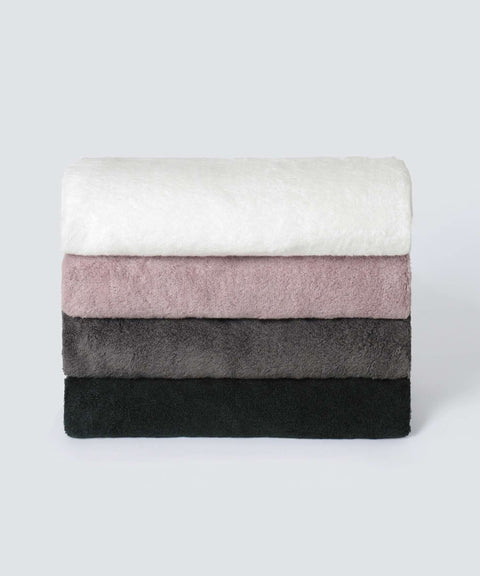
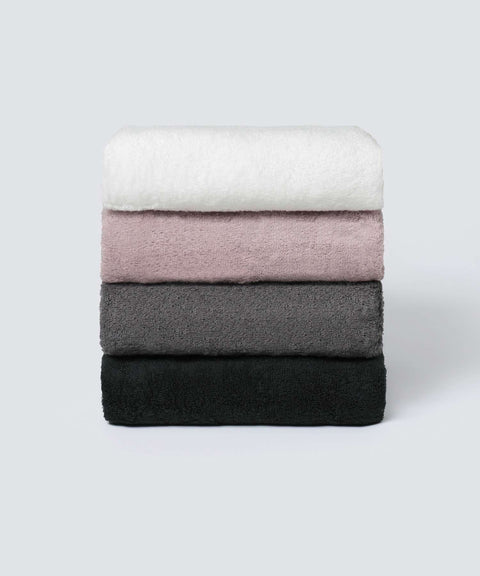
Japanese Hotel and Onsen Towels: Why They Feel Different and Where to Buy Them
You dried your face at a ryokan or an onsen in Japan, and the towel did something the one at home does not do. It took the water instantly, it stayed light, and it was dry again by the evening. That is not your imagination, and it is not the hot spring. It is how the towel was made.
The five-second test
There is a simple test used in the towel trade, and you can try it in your room. Float a piece of towel on water. It should begin to sink within five seconds. A towel that sits on the surface has not absorbed anything.
It sounds like a party trick, but it is a real threshold: it is one of the tests a towel has to pass to carry the Imabari Towel Brand mark. Most towels sold abroad would fail it.
Why the yarn matters more than the thickness
People reach for heavy towels, assuming weight means absorbency. It does not. What absorbs is air in the fibre.
Foo Tokyo’s towels are spun with an unusually low twist, so the cotton itself holds air and stays soft. Low-twist yarn breaks easily, so each thread is then sized individually — a slow, specialised step that gives the strength back without pressing the air out. Nothing harsh is used in the processing: no formaldehyde, no optical brighteners, no chlorine.
The cotton is organic, grown in India, and accounts for less than 0.001% of world production. It is picked by hand so the fibres are not cut.
Why Imabari
Imabari, in Ehime prefecture on the island of Shikoku, has made towels for more than a century and is Japan’s largest towel-producing region. Two things set it apart.
The first is water. Imabari dyes and finishes with soft water drawn from the Soja river, which is gentle on cotton and lets the yarn keep its loft. The second is that everything — twisting, weaving, dyeing, sewing — happens inside the same region, so a towel is finished where it was started.
Foo Tokyo’s towels are certified under the Imabari Towel Brand (certification no. 2018-626) and carry the mark. The certification is given only to towels that clear the region’s own thresholds for absorbency, pile retention and colour fastness.
Made for hotels and ryokan in Japan
The towels on this page come from the same organic cotton line we supply to hotels and ryokan in Japan.
We also make for hotels and trains in other forms — loungewear for The Tokyo EDITION, Toranomon, kids’ pajamas and in-room fabric amenities for Capella Kyoto, and blankets for the Seven Stars in Kyushu cruise train.
Which size you actually want
Japanese towels are sized differently from European and American ones, which catches people out — a Japanese bath towel is narrower and lighter than a Western bath sheet. The face towel, at 33 × 85 cm, is the size Japanese households use most, and the one most visitors end up buying.
The full size table, and how to choose between them, is in our guide to Japanese towels.
Where to buy them in Tokyo
If you are still in Japan, both of our Tokyo shops are tax-free for visitors from overseas and you can handle the towels before you buy: the directly operated store on the 5th floor of Nihonbashi Mitsukoshi, and the shop on the 6th floor of Matsuya Ginza. Access and opening hours for both are on where to buy Japanese pajamas in Tokyo.
If you have already flown home, everything here ships worldwide with import duties included — nothing further to pay on delivery.
Looking after them
Wash a new towel once before you use it, and skip the fabric softener. Softener coats the fibres, and it is the most common reason a good towel stops absorbing. That single habit matters more than anything else you will do to it.